
What Is RASFF? The EU Rapid Alert System for Food and Feed, Explained

RASFF at a glance: the network, how a notification travels, its link to TRACES, the notification types, and what 2026 and 2025 looked like, counted from the public RASFF Window.
RASFF is the EU system that turns one country’s food safety finding into a warning for all the others. This guide shows, mostly in charts, who is in the network, how a notification travels and connects to TRACES, what RASFF flagged in 2026 and 2025, and where iComplai fits.
What is RASFF?
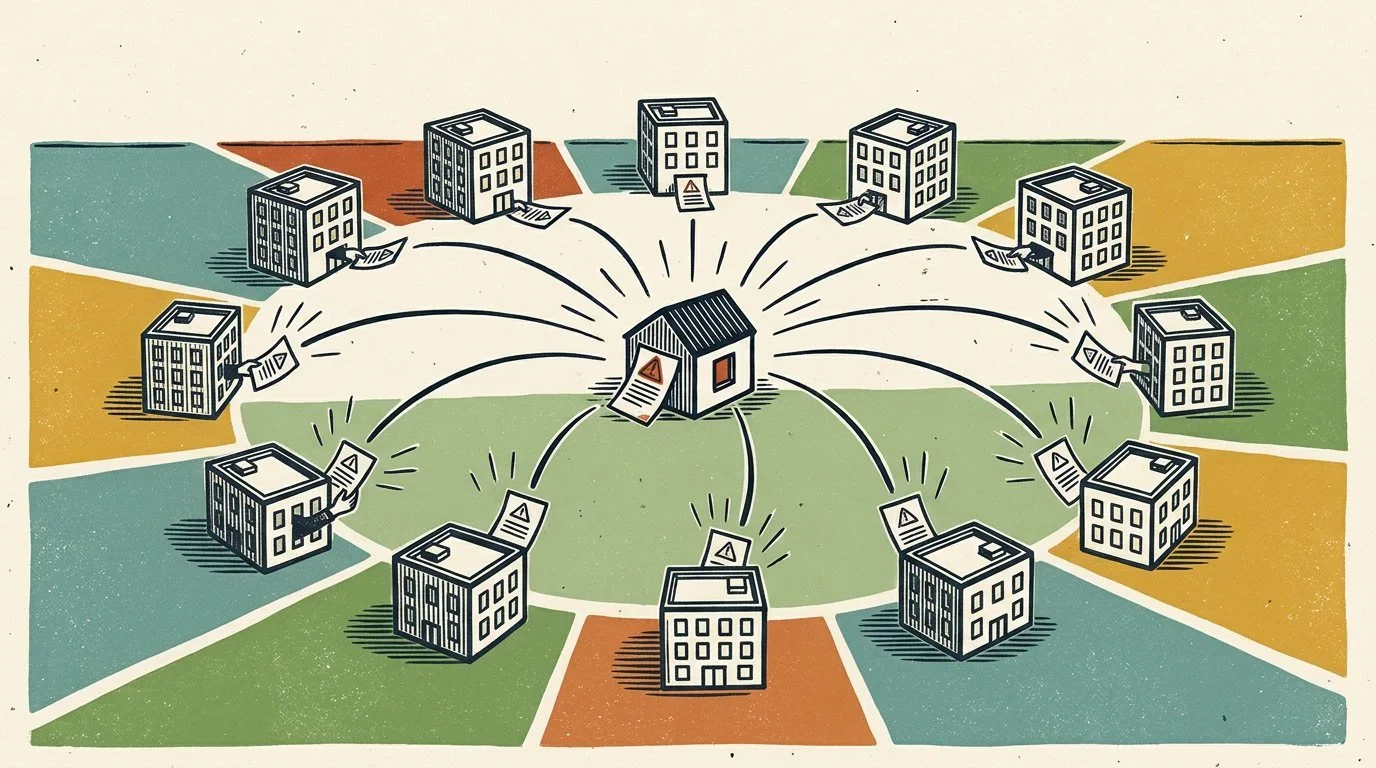
RASFF, the Rapid Alert System for Food and Feed, is the network through which EU food safety authorities warn each other about health risks from food, feed and food contact materials, so that every country can act on the same information.[1][4] Its legal basis is Article 50 of the General Food Law. The network involves the Member States, the Commission and the European Food Safety Authority (EFSA), each with its own contact point, and the Commission runs it.[3] It works round the clock.[1]
How has RASFF developed since 1979?
It began in 1979, prompted by an incident with oranges, with nine countries sharing information by phone and telex.[2] Two changes shaped today’s system: the General Food Law of 2002, which gave RASFF its legal basis and brought feed in, and the 2019 IMSOC Regulation, which placed RASFF inside the wider Alert and Cooperation Network.[2][4]
Which countries are in the RASFF network?
All 27 EU Member States, plus Iceland, Liechtenstein, Norway and Switzerland through agreements with the EU. The Commission, EFSA and the EFTA Surveillance Authority are members too.[5] The United Kingdom, a founding member, is not on the current list.[2][5] The Commission keeps countries outside the network informed through the RASFF Window, to which more than 100 countries have access.[7]
How does a RASFF notification work?
A national authority finds a risk, its contact point validates the notification, and the Commission checks it and passes it to every member.[6][7] The checks cover completeness, legal basis and scope, and look for repeat operators, hazards and origins.[4] Companies do not notify RASFF themselves: a business that believes a food it placed on the market may be injurious to health must inform its competent authority immediately.[3]
For alerts, the regulation sets hard deadlines:[4]
Know which notifications touch what you buy.
iComplai brings authority notifications and food safety signals together in one place and maps them to the ingredients, origins and suppliers you actually buy.
See emerging risk monitoringHow is RASFF connected to TRACES?
TRACES, the Trade Control and Expert System, is the European Commission’s online platform for animal and plant health certification: the system in which authorities and businesses complete the certificates and official documents needed to bring animals, animal products, food and feed into the EU.[10][11] iRASFF, the platform behind RASFF, and TRACES are two of the four components of IMSOC, the EU’s information system for official controls, and TRACES exchanges data with iRASFF.[4][10][11]
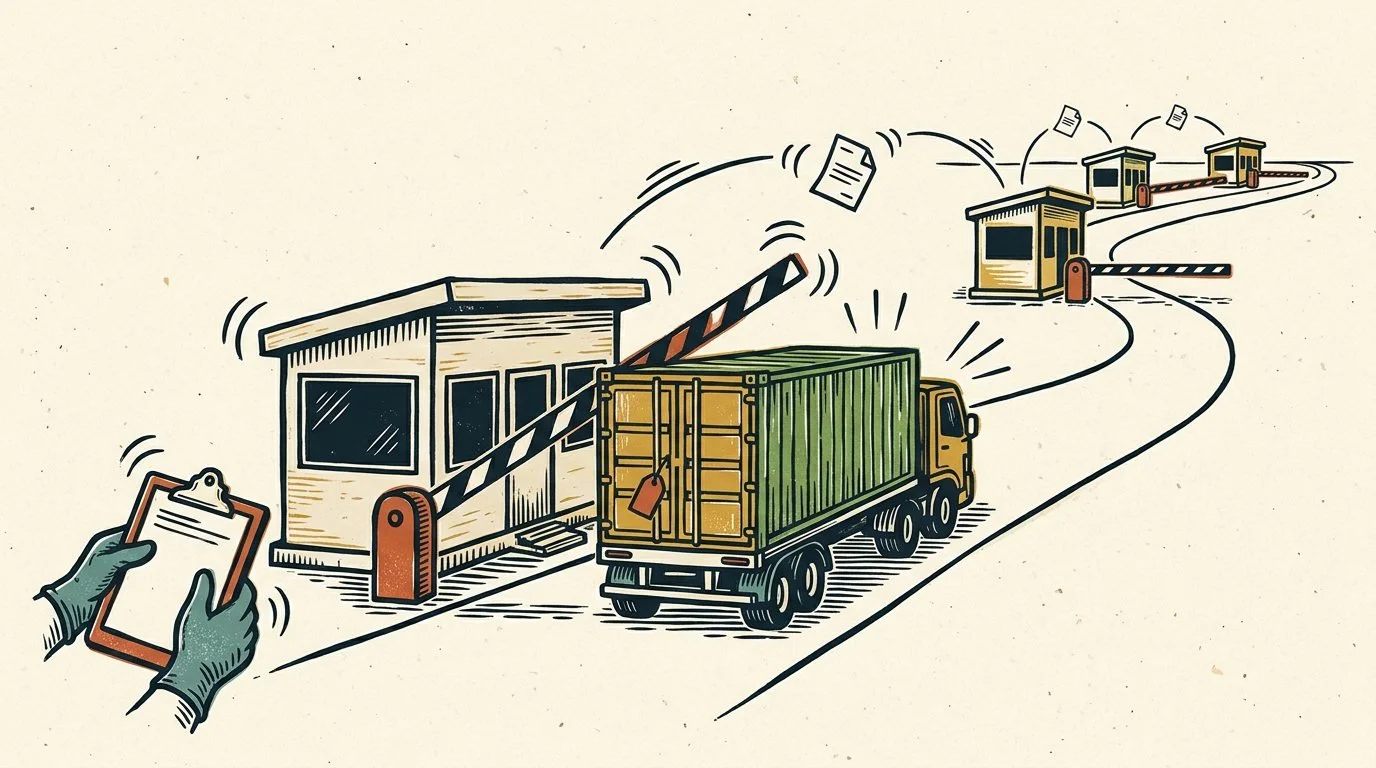
They meet at the border. Since 2019 the Common Health Entry Document (CHED) for consignments checked at EU border control posts has been issued in TRACES.[10] When a consignment is refused for a food or feed risk, the border rejection notification is transmitted through TRACES to all border control posts, so the rejected product cannot simply try another way in.[4][6]
For an importer the two answer different questions: TRACES carries the paperwork and the decision on one consignment, RASFF tells every member country when a product turned out to be a risk. Of the four IMSOC systems, only RASFF shows individual notifications to the public, in the RASFF Window; ADIS and EUROPHYT publish overviews, and TRACES is open to authorities and the businesses that issue documents in it.[1][10][13][14]
What types of RASFF notification are there?
Four types appear in the public RASFF Window, defined in the IMSOC Regulation: alerts, border rejections, and two kinds of information notification. A fifth, news, carries unverified or informal information and is not published.[4] In 2025 alerts were the largest group, just ahead of border rejections; so far in 2026 information notifications for attention lead.[9] A separate guide covers what each type means for a buyer.
Each notification also carries a risk decision. A notification is not automatically a serious risk:
What does RASFF flag most often?
Pathogenic micro-organisms, pesticide residues and mycotoxins lead by a wide margin. Together they appear in about two thirds of the notifications that name a hazard category, in 2025 and again in 2026, and nine in ten notifications concern food rather than feed or packaging.[9] Pathogens are the category that grew: 1,001 notifications by 26 October 2026, already more than in the whole of 2025 (979).[9]
For a buyer, the pattern matters more than any single notification: which hazards, products and origins keep returning is the starting point of horizon scanning.
Which products and origins does RASFF flag most?
Fruits and vegetables lead in both years. The change in 2026 is poultry meat: 499 notifications by 26 October, against 395 in the whole of 2025. Türkiye was the most frequent country of origin in both years.[9] These are absolute notification volumes, not percentages of the products exported from each country, so a higher number of notifications does not necessarily mean a riskier origin; it can rise with the total imports from that country. Where possible, iComplai also shows the percentage ratio of notifications per country.
What are the RASFF Window, the Consumers’ Portal and iRASFF?
iRASFF is the members’ own platform, open only to their competent authorities. The RASFF Window and its Consumers’ Portal are the public faces.[1][6]
Brands and business operators are not shown.[1] The Window is built for searching; getting RASFF notifications automatically is a separate task.
What is the difference between RASFF and iComplai?
RASFF is the authorities’ own warning network; iComplai is a risk intelligence platform for food companies that reads RASFF together with many other sources. A RASFF notification records what one member authority found and shared with the others, and the public Window shows a summary without brands or operators.[1][4] iComplai collects authority notifications from around the world, RASFF among them, with food safety signals from more than 150,000 global sources, and links them to the ingredients, origins and suppliers a company actually buys.
Repetition is why that filtering matters. Of the 4,383 RASFF notifications validated in 2026 up to 26 October, 3,421 repeated a combination of hazard, product category and origin already notified since 2020. 962 carried a new combination, and 408 of those were rated serious.[9]
A new hazard and product pair is the kind of signal iComplai flags: it can open a HACCP review through an integration with the systems you already run, price and harvest signals feed food fraud risk prediction, and the week’s changes arrive as emerging risk monitoring every Monday.
The iComplai platform shows the same picture from further out. RASFF supplied 15% of the authority records it collected from January to 26 October 2026, from notifications and recalls to border rejections, import refusals and import alert listings. For the hazards RASFF flags most, the other authorities add more records than RASFF itself, with one exception, mycotoxins:
What does the RASFF annual report show?
The Commission must publish an annual report on the notifications exchanged in iRASFF. Since the networks merged, it is the Alert and Cooperation Network Annual Report; the 2025 edition is the latest.[4][7] Its headlines: more than 10,000 notifications across the network, Germany, the Netherlands and Belgium notifying most, and alerts overtaking border rejections.[8]
Suspected fraud is counted too, which is the risk a food fraud vulnerability assessment looks at.[8] Between annual reports, the Commission publishes monthly reports on EU agri-food fraud suspicions.[12] The annual report is written for the network as a whole; iComplai’s AI assistant writes the same kind of summary for a company’s own materials. The Window itself shows the longer run:
RASFF: FAQ
What does RASFF stand for?
RASFF stands for the Rapid Alert System for Food and Feed. When it was created in 1979 it was called the Rapid Alert System for Food; feed was formally added with the General Food Law in 2002.
What is a RASFF alert?
An alert notification reports a serious risk from food, feed or a food contact material that requires, or might require, rapid action by another member country. The national contact point must send it to the Commission within 48 hours, and the Commission must check it and pass it on within 24 hours.
Can a food company send a RASFF notification?
No. Only member authorities and the European Commission have access to RASFF. A company that believes a food it placed on the market may be injurious to health must inform its competent authority immediately; the authority decides whether to notify.
What is the difference between RASFF and TRACES?
TRACES is the Commission’s platform for the certificates and documents, including the Common Health Entry Document, that consignments of animals, animal products, food and feed need to enter the EU. RASFF, through iRASFF, carries risk notifications between authorities. Both belong to IMSOC, and border rejections notified in RASFF are passed to all border control posts through TRACES.
Is RASFF data public?
Partly. The RASFF Window publishes summaries of notifications from 2020 onwards: classification, product, risk, origin, distribution countries, notifying country and measures taken. Brands and business operators are not shown.
Why are company names not in RASFF notifications?
Because the public RASFF Window does not reveal commercial details such as brands and business operators.[1] Under the General Food Law the public should in general have access to the product identification, the nature of the risk and the measure taken, while the staff of network members must not disclose information covered by professional secrecy, except where it must be made public to protect human health.[3] The companies behind a notification are therefore not identified in RASFF.
Is iComplai part of RASFF?
No. RASFF is run by the European Commission for member authorities. iComplai is an independent platform that reads public RASFF data together with other authorities’ notifications and signals from more than 150,000 global sources, and maps them to a company’s own ingredients, origins and suppliers.
Which countries use the RASFF Window?
Anyone can search it, and more than 100 countries have access to it. For countries outside the network it is the main way to learn about notifications on products produced in, dispatched from or exported to them.
How many RASFF notifications are there each year?
The public RASFF Window holds 5,364 notifications validated in 2024 and 5,328 in 2025. In 2026 the count had reached 4,383 by 26 October, about 5% more than at the same point in 2025.
Start with the ingredients you buy
We can show which RASFF notifications touched your own ingredients, origins and suppliers over the last weeks.
Talk to iComplaiMore on RASFF and EU food alerts
Earlier iComplai articles on this topic, newest first.
References
All sources were checked on 28 and 29 October 2026. RASFF counts are of the notifications in the public RASFF Window on 27 October 2026 (validated up to 26 October); the Commission’s annual reports can differ slightly. Statements about iComplai describe the platform as published on icomplai.com. This guide is informational, not legal advice.
[1] European Commission. Rapid Alert System for Food and Feed (RASFF). food.ec.europa.eu
[2] European Commission. History of RASFF. food.ec.europa.eu
[3] Regulation (EC) No 178/2002 (General Food Law), Articles 19, 50 and 52. eur-lex.europa.eu
[4] Commission Implementing Regulation (EU) 2019/1715 (IMSOC Regulation), Articles 2, 3, 17 to 20, 24 and 27. eur-lex.europa.eu
[5] European Commission. Alert and Cooperation Network: members. food.ec.europa.eu
[6] European Commission. Alert and Cooperation Network: notifications. food.ec.europa.eu
[7] European Commission. Alert and Cooperation Network (ACN). food.ec.europa.eu
[8] European Commission. Alert and Cooperation Network Annual Report 2025. food.ec.europa.eu
[9] European Commission. RASFF Window, public search. Counts in this guide: iComplai, from the public export retrieved on 27 October 2026. webgate.ec.europa.eu
[10] European Commission. TRACES: TRAde Control and Expert System. food.ec.europa.eu
[11] European Commission. How does TRACES work? food.ec.europa.eu
[12] European Commission. Monthly reports on EU Agri-Food Fraud suspicions. food.ec.europa.eu
[13] European Commission. Animal Disease Information System (ADIS). food.ec.europa.eu
[14] European Commission. EUROPHYT. food.ec.europa.eu